
Micah Esposito is the Sr. Director of Product Development and has been with Stonhard since 2001. He holds a B.S in Chemical Engineering from Drexel University and a master's in business management from Temple University.
A Stonhard Technical Blog
Electrostatic discharge (ESD) poses a risk in industries like electronics manufacturing, pharmaceuticals, aerospace, and more. A single event can damage components, contaminate sterile environments, or cause safety issues.[1]
Traditional conductive flooring relies on additives like graphite or antimony-doped tin oxide, but these often require high concentrations, which can affect durability and aesthetics.[1][2]
Carbon nanotube (CNT) technology offers a better solution. CNTs create efficient conductive networks with lower filler volumes, preserving the strength and appearance of the flooring. This whitepaper explores how CNTs work, their benefits over traditional materials, and how Stonhard uses them in products like Stonchem 691 and Stonkote ESD.[2]
Key Highlights:
Carbon nanotube (CNT) technology enables flooring systems to meet conductivity requirements with lower additive levels, preserving structural integrity and design flexibility.
Key Advantages:
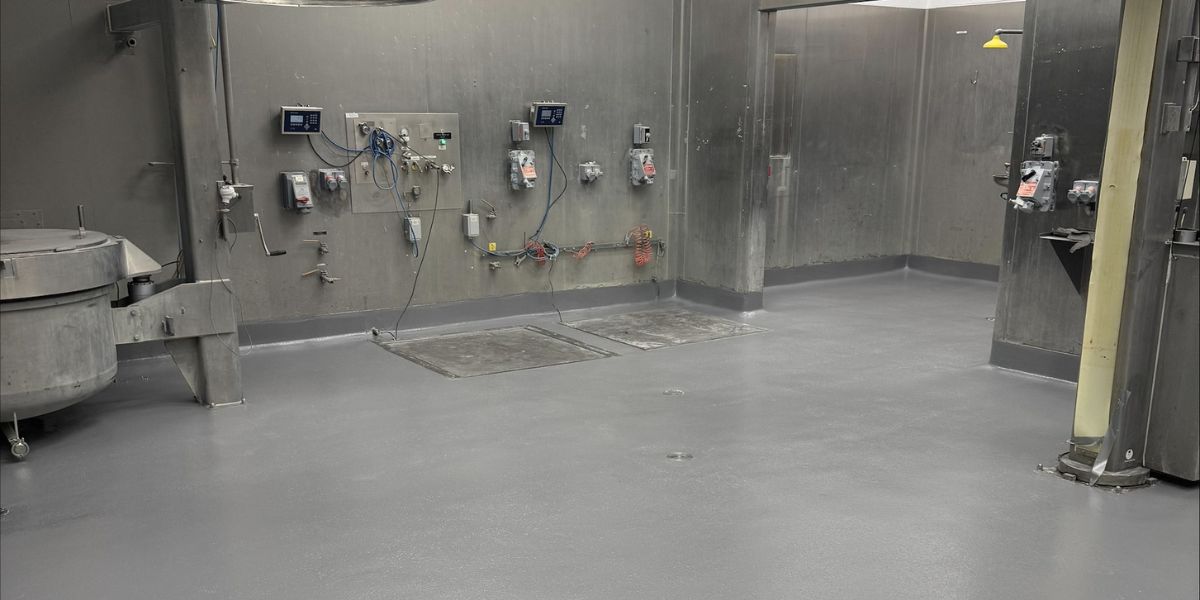
Conductive resinous flooring provides static control, cleanliness, and compliance in a pharmaceutical laboratory space
ESD flooring is critical in environments where uncontrolled static can cause damage or safety hazards. Industries like electronics, pharmaceuticals, aerospace, and munitions handling rely on consistent static control.
Key risks include:
Effective ESD flooring ensures compliance with standards like ANSI/ESD S20.20-2021, which governs static control programs.[1]
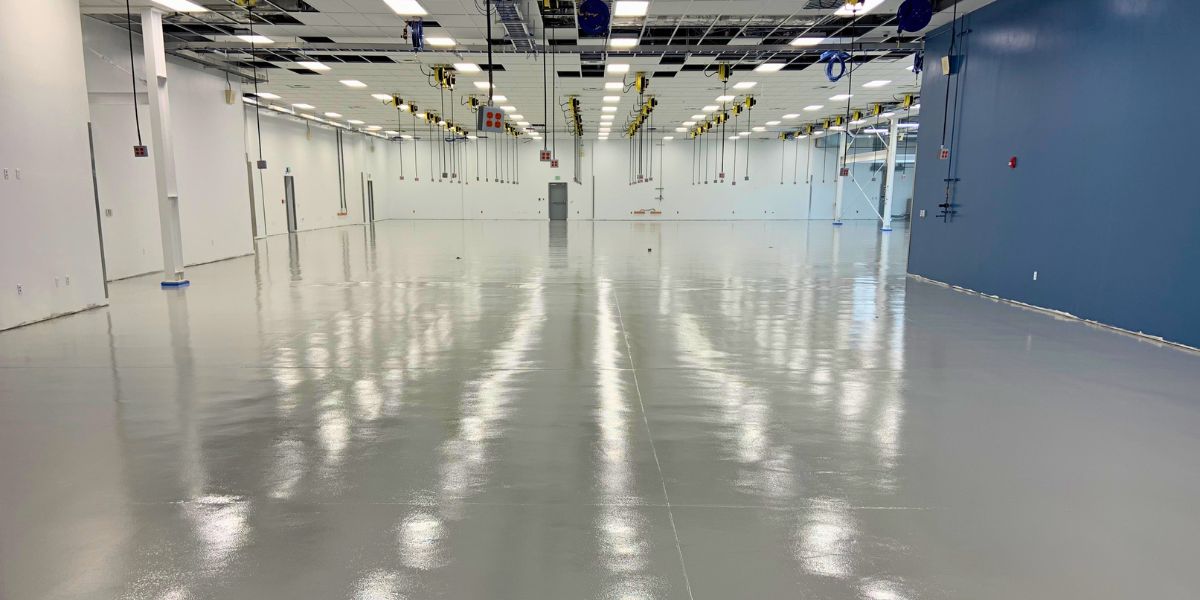
Static-control flooring designed for aerospace assembly, testing, and maintenance facilities
Common Conductive Additives and Their Limitations:
Why CNTs Outperform:
CNTs achieve conductivity with lower filler volumes, enabling better performance, aesthetics, and flexibility.[2]
Mechanical Strength
Excessive filler weakens the base resin system. CNTs require less filler, preserving the flooring’s adhesion, flexibility, and chemical resistance.
Design Flexibility
Unlike traditional additives that darken coatings, CNTs allow for a range of colours, supporting safety markings and aesthetic needs.
Surface Quality
High filler levels can reduce smoothness and cleanability. Lower CNT levels retain seamless surfaces ideal for cleanrooms and controlled environments.
Stonchem 691
A conductive novolac epoxy coating with exceptional chemical resistance, ideal for:
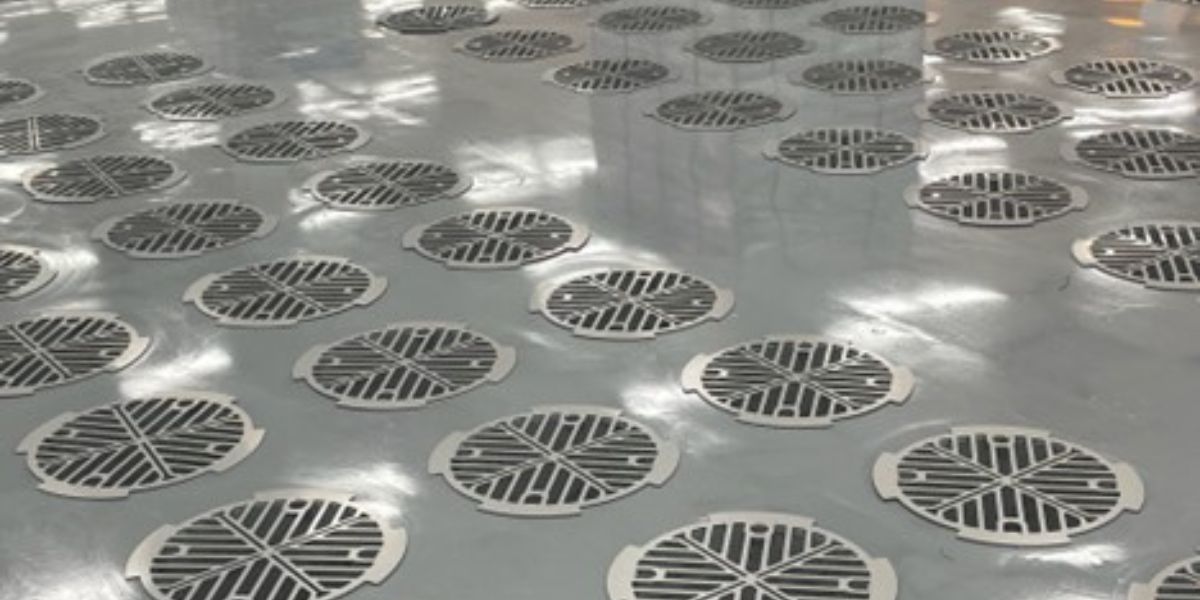
Stonchem 691 novolac epoxy flooring for a semiconductor fab
A pigmented, glossy epoxy coating designed for environments like:
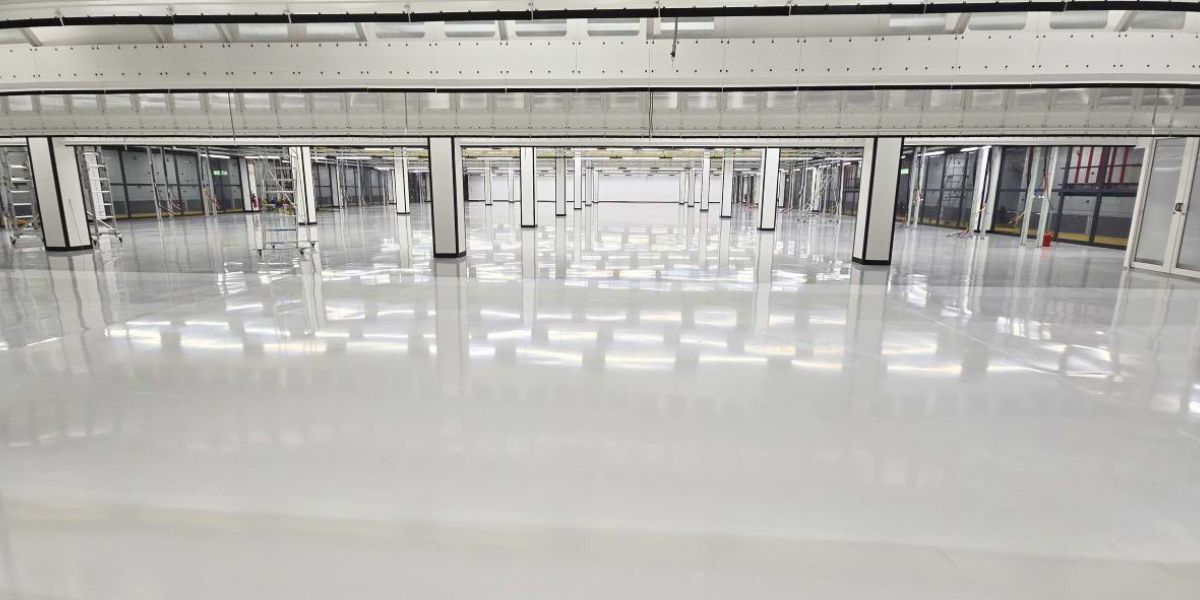
A data centre floor with electrostatic discharge protection from Stonkote ESD flooring
| Feature | Stonchem 691 | Stonkote ESD |
| Chemical Resistance | High | Moderate |
| Conductivity | Excellent | Excellent |
| Aesthetic Options | Multiple Colours | Multiple Colours |
| Typical Environments | Harsh Chemicals | Static-Sensitive |
What are carbon nanotubes?
Cylindrical carbon structures with high conductivity and efficiency.
How do CNTs improve flooring?
They achieve conductivity with lower filler levels, preserving strength and aesthetics.
What standards apply to ESD flooring?
Standards include ANSI/ESD S20.20, ANSI/ESD S7.1, and ASTM D257.
What’s the difference between conductive and static-dissipative flooring?
Conductive flooring is <1.0 × 10⁶ ohms, while static-dissipative ranges from 1.0 × 10⁶ to 1.0 × 10⁹ ohms. [8]
Selecting the right ESD flooring involves balancing conductivity, durability, chemical resistance, and aesthetics. Carbon nanotube technology offers an innovative solution for modern flooring needs.
Stonhard’s technical team can help evaluate your requirements and recommend the best system for your environment.
Contact us for a consultation or site evaluation!
Stonhard is the unprecedented world leader in manufacturing and installing high-performance polymer floor, wall and lining systems. Stonhard maintains 300 territory managers and 200 application teams worldwide who will work with you on design specification, project management, final walk-through and service after the sale. Stonhard’s single-source warranty covers both products and installation.
Micah Esposito is the Sr. Director of Product Development and has been with Stonhard since 2001. He holds a B.S in Chemical Engineering from Drexel University and a master's in business management from Temple University.