Steve Pattison is the Global Linings Technical Manager for Stonhard and has been with the organization since 2013. He helps manage the linings business globally and works closely with the Stonhard team throughout the world.
Chemical Resistance Demystified: Matching Flooring Systems to Industrial Exposures
When chemicals attack your floor, problems appear quickly: etching, softening, cracking, and coating failure. For facility managers, this can mean costly repairs, downtime, and compliance concerns. The good news? Selecting the right flooring system becomes much easier once you understand your specific chemical exposures.
Why Chemical Resistance Matters
Industrial flooring serves as a protective barrier for the concrete beneath it. When that barrier fails, damage can spread beyond the floor itself, potentially leading to environmental incidents, safety risks, and operational disruptions.
Research published in Cement and Concrete Research found that acidic environments progressively dissolve concrete's cement matrix, leading to microstructural deterioration and significantly reduced service life, reinforcing the need for protective flooring systems in chemically aggressive environments.[1]
The right flooring system should:
- Protect concrete from chemical attack
- Maintain safe, slip-resistant conditions
- Support easy cleaning and spill management
Proper specification extends floor life and keeps operations running smoothly.
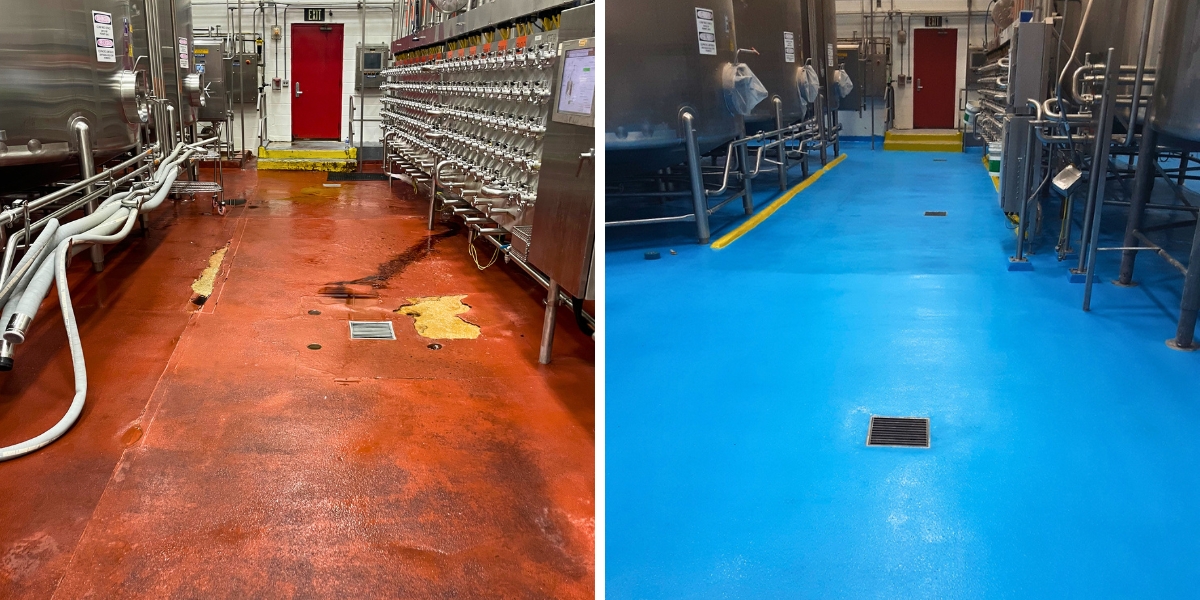
A failing floor is a safety and maintenance liability in food & beverage facilities. This upgraded batch room is protected by Stonclad UR, a seamless, chemical-resistant urethane flooring system.
Start by Understanding Your Exposure
Before selecting a system, identify:
Chemical Type
Common exposures include:
- Acids: Sulfuric, hydrochloric, nitric, and phosphoric acids
- Solvents: Alcohols, ketones, and aromatics
- Oils and Greases: Common in manufacturing and food facilities
- Cleaning Agents: Caustics, sanitizers, and washdown chemicals
Type of Contact
- Immersion: Continuous exposure in trenches, containment areas, or sumps
- Splash and Spill: Short-term exposure that is cleaned up promptly
A flooring system that performs well for spills may fail under constant immersion.
How Different Flooring Systems Perform
Epoxy Systems
Ideal for manufacturing environments with moderate chemical exposure.
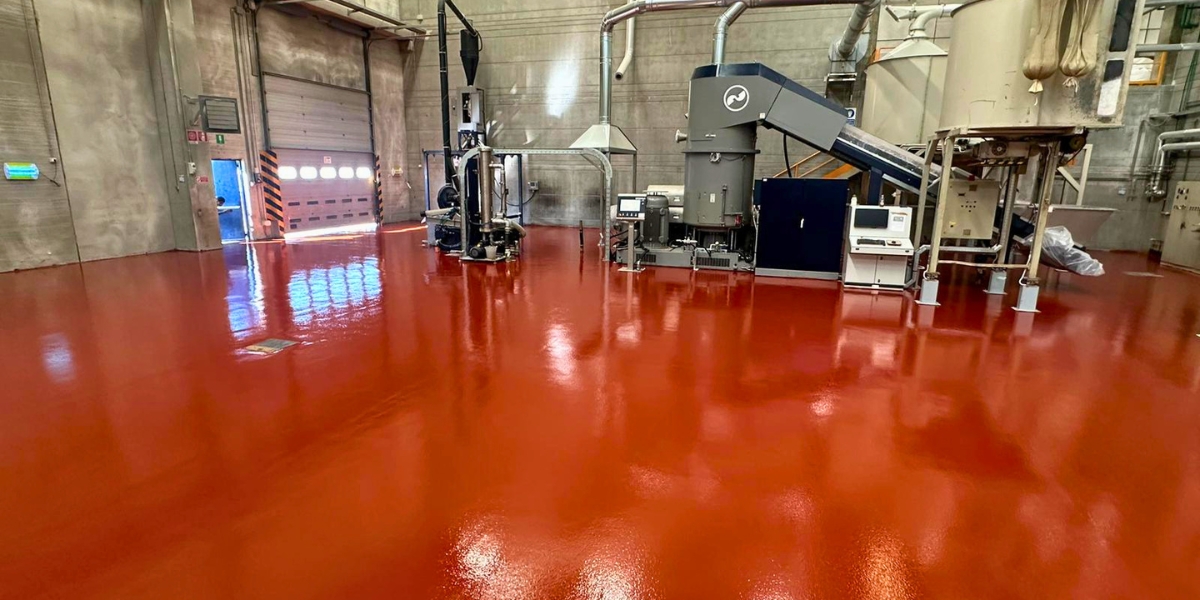
Built for demanding manufacturing environments, Stonclad GS delivers the durability needed to withstand oils, greases, and routine chemical exposure.
Novolac Epoxy Systems
Provide enhanced resistance to concentrated acids and aggressive solvents.
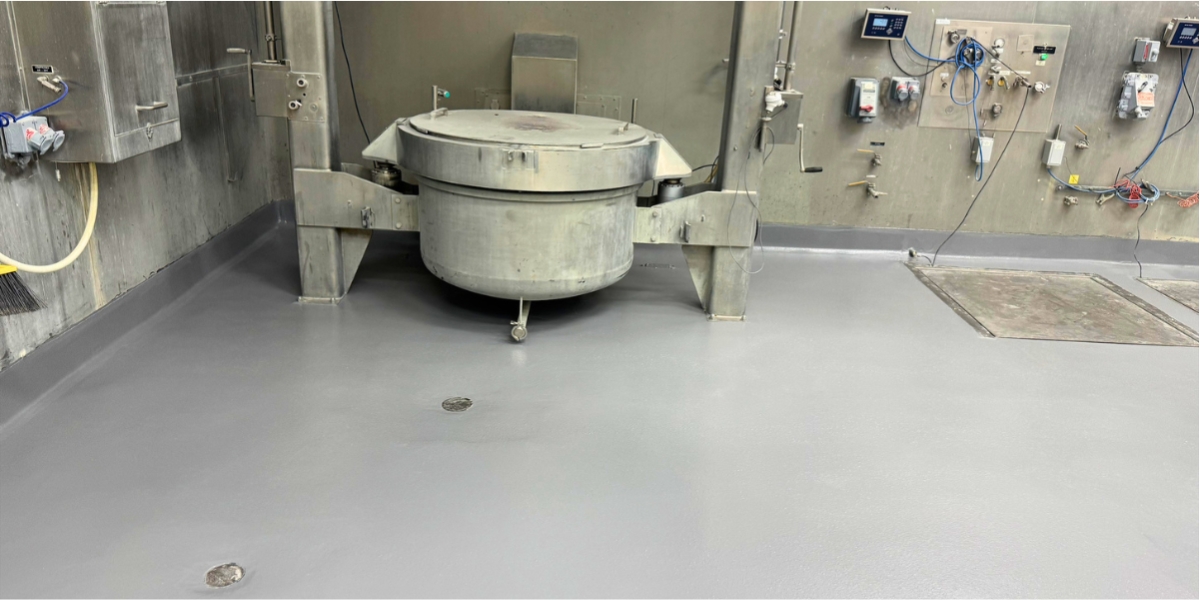
Stonchem 691's advanced novolac epoxy technology helps safeguard concrete substrates in chemical processing, semiconductor, and containment areas.
Urethane Systems
Excel in environments with thermal shock, moisture, frequent washdowns, and organic acids, making them ideal for food and beverage facilities where chemical resistance is critical.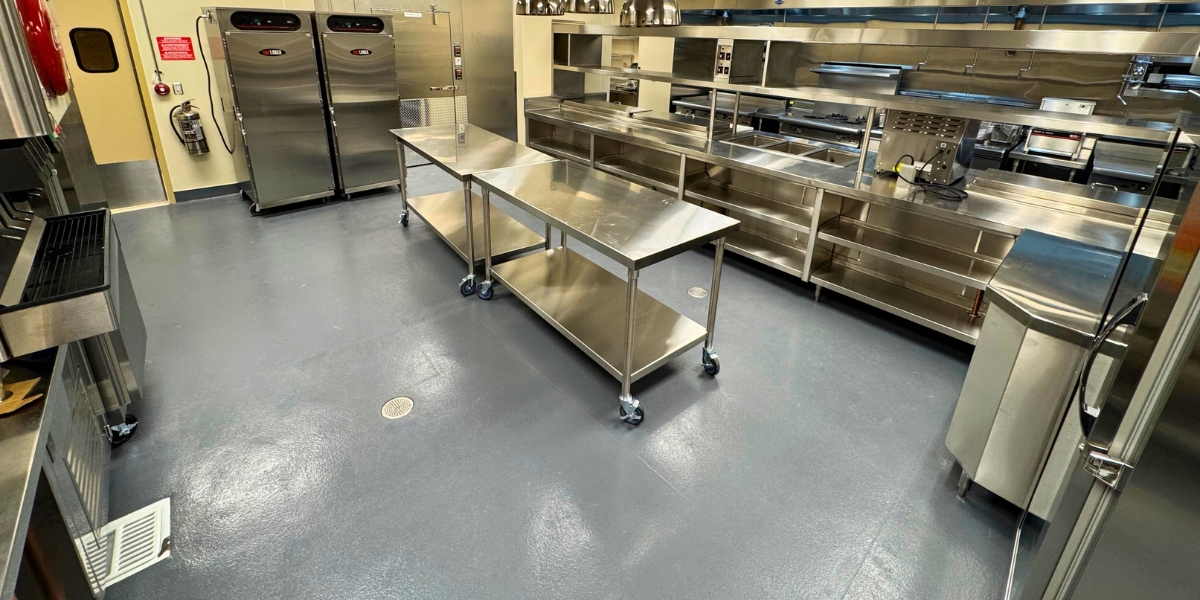
Stonclad UR is engineered for thermal shock, frequent washdowns, and exposure to cleaning chemicals – perfect for commercial kitchens.
Vinyl Ester and Polyester Systems
Provide excellent resistance to aggressive acids and corrosive chemicals, with vinyl ester systems typically offering the highest level of chemical resistance for the most demanding environments.
Industry Applications
Different industries face different challenges:
| Industry | Typical Chemical Exposure | Recommended System |
|---|---|---|
| Chemical Manufacturing | Concentrated acids, solvents, and aggressive process chemicals | Stonchem Lining Systems, Stonchem 691 |
| Food & Beverage | Organic acids, cleaning agents, hot water washdowns, thermal shock | Stonclad UR, Stonclad UT |
| Pharmaceutical | Cleaning chemicals, sanitizers, and environments requiring cleanability | Stontec TRF, Stontec UTF |
| Semiconductor Facilities | Aggressive chemicals, acids, solvents, and specialized process exposures | Stonchem 691 |
| General Manufacturing | Oils, greases, mild chemicals, and abrasion | Stonclad GS |
| Containment Areas & Secondary Containment | Continuous chemical immersion and highly aggressive chemicals | Stonchem Lining Systems |
| Commercial Kitchens & Dairies | Frequent washdowns, moisture, cleaning chemicals, and thermal cycling | Stonclad UR, Stonclad UT |
Don't Skip Chemical Resistance Testing
Always verify:
- The exact chemical exposure
- Actual concentration levels
- Chemical temperatures during normal operation and cleaning cycles
- Contact conditions (immersion vs. splash)
Small differences in concentration can dramatically change performance.
Surface Preparation Matters
Even the best flooring chemistry can fail without proper preparation.
Key steps include:
- Mechanical surface preparation
- Moisture testing
- Adhesion testing (ASTM D7234)
- Mock-ups and proper detailing around joints and drains
Protecting Your Investment
Long-term performance depends on regular inspections and maintenance. Periodic surveys, documentation, and prompt repairs help prevent small issues from becoming major shutdowns.
Specify With Confidence
Successful flooring selection comes down to a simple process:
- Identify chemicals and concentrations
- Define contact conditions
- Select a proven flooring chemistry
- Ensure proper installation
- Maintain the system over time
Done correctly, the result is longer service life, reduced downtime, easier compliance, and lower maintenance costs. Stonhard's chemical resistance expertise and single-source approach help facilities choose systems that keep operations protected for decades.
About Stonhard
Stonhard is the unprecedented world leader in manufacturing and installing high-performance polymer floor, wall and lining systems. Stonhard maintains 300 territory managers and 200 application teams worldwide who will work with you on design specification, project management, final walk-through and service after the sale. Stonhard’s single-source warranty covers both products and installation.